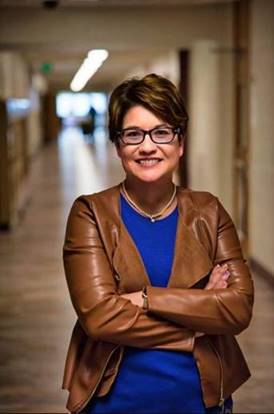
Accolades are piling up for Baker High School teacher Linda Rost.
Rost, a decorated science teacher, was named Montana teacher of the year in September. Now she's a finalist for the national title.
The Council of Chief State School Officers, which oversees the most widely recognized National Teacher of the Year award, named Rost as one of four finalists Thursday.
The group cited her passion for rural education, advanced science projects for students, and continuing training for teachers — all of which featured a hands-on approach.
"I think that students don't really understand what science is until they do science," Rost said.
She emphasized that a rural setting like Baker shouldn't hold students back from taking on ambitious projects or pursuing specialized studies.
"I don't want to be that teacher that's like 'oh, they're doing really cool things but we can't do that here because of this and this and this,'" she said. "A lot of what we do, we have to be resourceful and creative."
Rost pointed to a microbiology project a student is working on that requires storage for cells at -80 degrees Celsius. A lab-style freezer would have cost tens of thousands of dollars, but a cold-storage tank for bull semen did the trick.
"I think that actually improves the program and improves the experience," she said. "(Students) have to be the experts."
Projects like that are included in The Bringing Research into the Classroom project, linking students in Baker with Montana Tech researchers, which Rost spearheads for the school.
She's also waded into education policy; she was part of a statewide committee that rewrote science teaching standards that were approved in 2016, and created a group in Baker to focus on K-12 collaboration in science, math and Indian Education For All.
More than 20 of her students have competed at national or international science competitions, including a first-placer at the 2012 National Junior Science and Humanities Symposium, according to a press release about the finalists.
Rost worked in scientific labs researching soil, fire ecology, and invasive species before becoming a teacher. But she found the work isolating, and after moving to Montana, pursued a teaching job in Ekalaka.
At first, her qualification didn't fit, but she was hired on an emergency license — something that an increasing number of schools are turning to that's viewed as a band-aid solution. Rost earned her teaching certification through Northern Plains' transition to teaching program and is now pursuing a doctorate from Texas Tech.
She said that she hopes to use recognition as a national finalist to draw attention to rural teaching shortages and potential solutions, particularly grow-your-own programs that train people with roots in rural communities.
"Those are the ones who are going to stay there," Rost said. "We need to recognize that this is really effective. ... They need to be funded and prioritized."
Montana Superintendent of Public Instruction Elsie Arntzen applauded Rost in a press release.
“Montana is blessed to have some of the highest quality educators in the nation, and Mrs. Rost is proof of that,” Arntzen said in the release.
Montana's most recent finalist for National Teacher of the Year was Bozeman High School's Paul Andersen in 2011. Richard Nelson from Kalispell earned the honor in 1956 and remains the only Montana teacher to win the national award, according to the Office of Public Instruction.
The 2020 award winner is expected to be named this spring.
Rost, a decorated science teacher, was named Montana teacher of the year in September. Now she's a finalist for the national title.
The Council of Chief State School Officers, which oversees the most widely recognized National Teacher of the Year award, named Rost as one of four finalists Thursday.
The group cited her passion for rural education, advanced science projects for students, and continuing training for teachers — all of which featured a hands-on approach.
"I think that students don't really understand what science is until they do science," Rost said.
She emphasized that a rural setting like Baker shouldn't hold students back from taking on ambitious projects or pursuing specialized studies.
"I don't want to be that teacher that's like 'oh, they're doing really cool things but we can't do that here because of this and this and this,'" she said. "A lot of what we do, we have to be resourceful and creative."
Rost pointed to a microbiology project a student is working on that requires storage for cells at -80 degrees Celsius. A lab-style freezer would have cost tens of thousands of dollars, but a cold-storage tank for bull semen did the trick.
"I think that actually improves the program and improves the experience," she said. "(Students) have to be the experts."
Projects like that are included in The Bringing Research into the Classroom project, linking students in Baker with Montana Tech researchers, which Rost spearheads for the school.
She's also waded into education policy; she was part of a statewide committee that rewrote science teaching standards that were approved in 2016, and created a group in Baker to focus on K-12 collaboration in science, math and Indian Education For All.
More than 20 of her students have competed at national or international science competitions, including a first-placer at the 2012 National Junior Science and Humanities Symposium, according to a press release about the finalists.
Rost worked in scientific labs researching soil, fire ecology, and invasive species before becoming a teacher. But she found the work isolating, and after moving to Montana, pursued a teaching job in Ekalaka.
At first, her qualification didn't fit, but she was hired on an emergency license — something that an increasing number of schools are turning to that's viewed as a band-aid solution. Rost earned her teaching certification through Northern Plains' transition to teaching program and is now pursuing a doctorate from Texas Tech.
She said that she hopes to use recognition as a national finalist to draw attention to rural teaching shortages and potential solutions, particularly grow-your-own programs that train people with roots in rural communities.
"Those are the ones who are going to stay there," Rost said. "We need to recognize that this is really effective. ... They need to be funded and prioritized."
Montana Superintendent of Public Instruction Elsie Arntzen applauded Rost in a press release.
“Montana is blessed to have some of the highest quality educators in the nation, and Mrs. Rost is proof of that,” Arntzen said in the release.
Montana's most recent finalist for National Teacher of the Year was Bozeman High School's Paul Andersen in 2011. Richard Nelson from Kalispell earned the honor in 1956 and remains the only Montana teacher to win the national award, according to the Office of Public Instruction.
The 2020 award winner is expected to be named this spring.